Nail services
Soft square or oval nails? Choose a shape for your day
The name of a nail shape is only a starting point. Length, corners and the way you use your hands make the choice personal.
The short answer
What to remember
- Soft square keeps a straighter edge with rounded corners; oval curves around the tip.
- Choose length as well as shape for your usual activities.
- Review the first nail before the rest are shaped.
Look at the edge
A soft square nail has an edge that stays relatively straight across, with corners softened rather than left sharp. An oval nail curves more gradually around the tip. People may interpret these names differently, so a reference picture can help, but describing the edge in your own words is more precise than relying on the name alone.
Look at your hands from above and from the side. Do you like a defined line or a gentle curve? Do you want to keep your present length? There is no rule assigning one shape to a particular hand. Choose what you enjoy seeing and what feels comfortable in your normal routine.
Try your everyday movements
Think about the tasks you repeat: typing, using your phone, handling delicate fabric or putting in contact lenses. Place your fingers as you would for those activities and notice where a long tip or a corner might bother you. Length can make a bigger difference to comfort than the label attached to the shape, so start with a length you already know works for you.
A soft square may appeal if you like a straighter edge without prominent corners. An oval may appeal if you prefer a continuous curve. Neither shape guarantees that a nail will never break or catch. Test the result with ordinary movements and ask for an uncomfortable edge to be adjusted.
Allow for different lengths
Find your shortest nail and consider how visible the difference is when you move your hands naturally. You might prefer a close match that preserves some length, or a more uniform short result. Discuss this before cutting: once removed, length cannot be restored during the appointment.
Changing a square edge to an oval may require filing the sides and tip. Ask how much length will be affected before the specialist begins. On very short nails the distinction between shapes may be subtle; a gentle curve can be a useful starting point without trying to reproduce a photograph that requires a longer nail.
Describe the result during your appointment
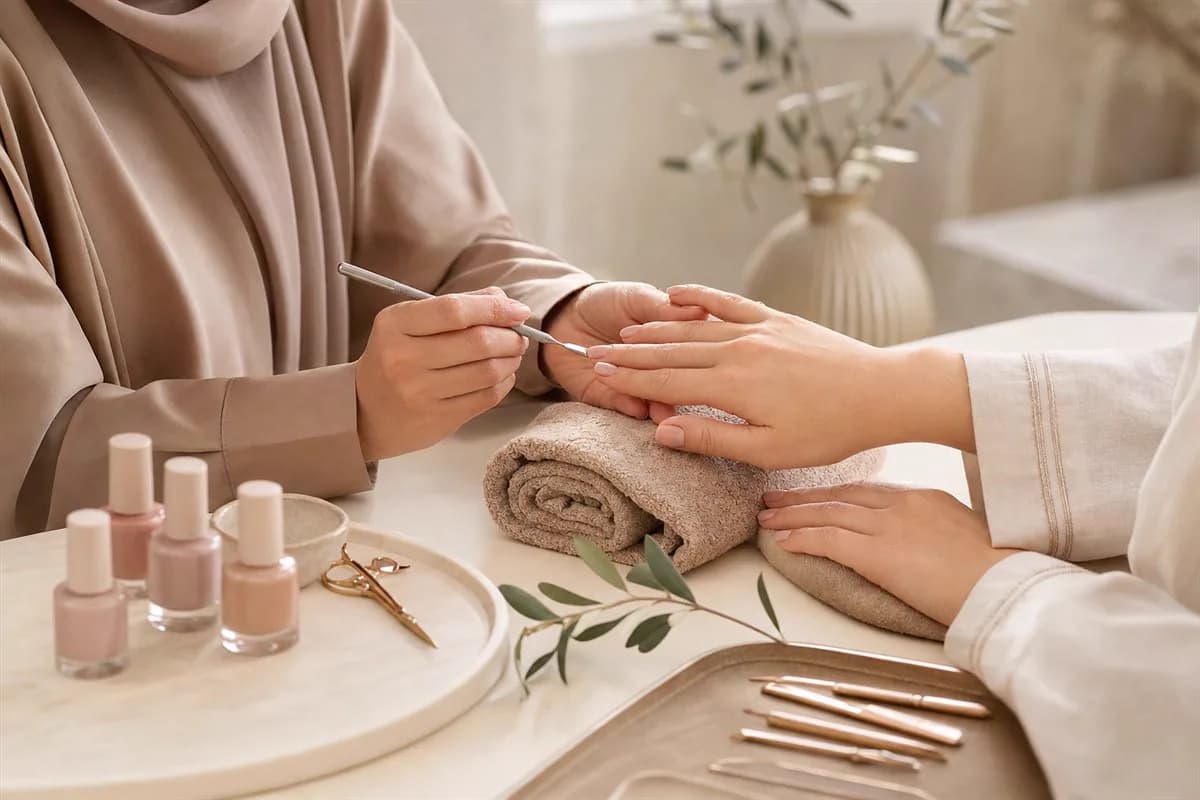
For a classic manicure with Vela Spa, you might request a nearly straight edge with soft corners while keeping as much length as possible. Alternatively, ask for a rounded tip without excessively narrowing the sides. Say what you do not want too, such as sharp corners or cutting every nail down to match one broken nail.
Review the first nail together before proceeding. If it looks shorter or rounder than expected, refine your description at that point. Check the current booking details for the service and finish you want. A short conversation makes the broad shape name into a result you can both understand.
Care for edges gently
A neat shape does not require cutting the cuticle. The American Academy of Dermatology recommends avoiding cuticle cutting and forceful pushing; tell the specialist if you want gentle care around the nail. If a small edge catches between appointments, smooth it carefully rather than pulling it, and moisturize your hands with a product that suits you.
Postpone cosmetic care when there is a wound, pain or redness around a nail, and seek appropriate advice for persistent changes. Changing the shape does not treat a nail condition. Your practical goal is a comfortable edge and a look you enjoy throughout the day.
Quick answers
Frequently asked questions
Is soft square the same as a sharp square?
Both have a relatively straight edge, but soft square rounds the corners. Agree on how much rounding you prefer.
Can short nails be oval?
A gentle curve is possible, although the available length affects the result. Review the first nail together.
Must every nail be exactly the same length?
No. Discuss the difference and how much shortening you are comfortable with before filing.
How can I explain a shape without knowing its name?
Describe the length, edge and corners, share a reference picture and check the first nail.
Editorial sources
Health-related statements were checked against the following public guidance. Links open the original publisher.
A shape for your routine
Choose your manicure details
Review the classic manicure and agree on length and edges before care begins.